AuthorDr Victoria Shepherd Archives
March 2024
Categories |
Back to Blog
CONNECTIONS17/3/2024 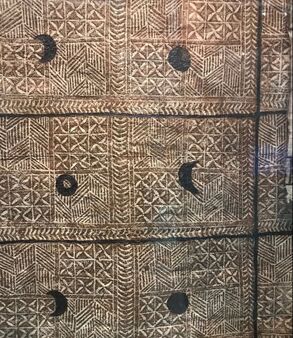 At the end of a very busy second week in Australia (meeting people as part of my Churchill Fellowship), I took some time out to visit the amazing Australian Museum which overlooks Hyde Park and St Mary's Cathedral. It is the oldest museum in Australia and has collections ranging from natural history to anthropology and mineralogy, it also houses the Australian Museum Research Institute (AMRI) which focuses on addressing contemporary challenges such as climate change and biodiversity.
I was particularly keen to visit the galleries and collections that focus on First Nations cultures and experiences. The museum has collaborated with First Nations peoples and communities to develop the exhibitions, and the museum website acts as a platform for First Nations voices with articles from First Nations writers Starting on the ground floor, I visited the Burra space to see the Garrigarrang (Sea Country) exhibition which explores the cultural and spiritual traditions of the Salt Water People from the New South Wales coast. I learned about this community's history and Ancestral Law and how knowledge of the Country and way of life is passed from Elders to the next generation. It also includes the 'ghost net' installation made out out of discarded fishing nets that are found on the coast of northern Australia and are responsible for killing wildlife. Part way through exploring the gallery, the sound of voices singing burst into life in the gallery above. This turned out to be the Maori Kapa Haka group Te Raranga Whanui - it was breathtaking to see and hear their performance in the middle of the Wansolmoana gallery. It brought the exhibition to life. Particularly as many of the items on display evoke themes emerging in the Fellowship, that of fostering connections and relationality. That includes the weavings and tapa (bark cloth), one of which is shown in the photo above, that are exchanged between the Pasifika people as part of forging and fortifying relationships. Visiting the museum, especially during a performance by members of the Pasifika community, is highly recommended and something I will take into my final week of this leg of the Fellowship. Comments are closed.
|

 RSS Feed